Cambridge International · IGCSE · English Literature
Stories of Ourselves Volume 2 (Selected)
Dive into the rich, diverse worlds of Stories of Ourselves Volume 2. This anthology challenges you to explore complex human experiences across different cultures, rewarding perceptive analysis of narrative voice, structure, and thematic intersections.
- 5 min read
- 2 worked examples
- 4 practice questions
- 8 key terms
Study Notes
Overview
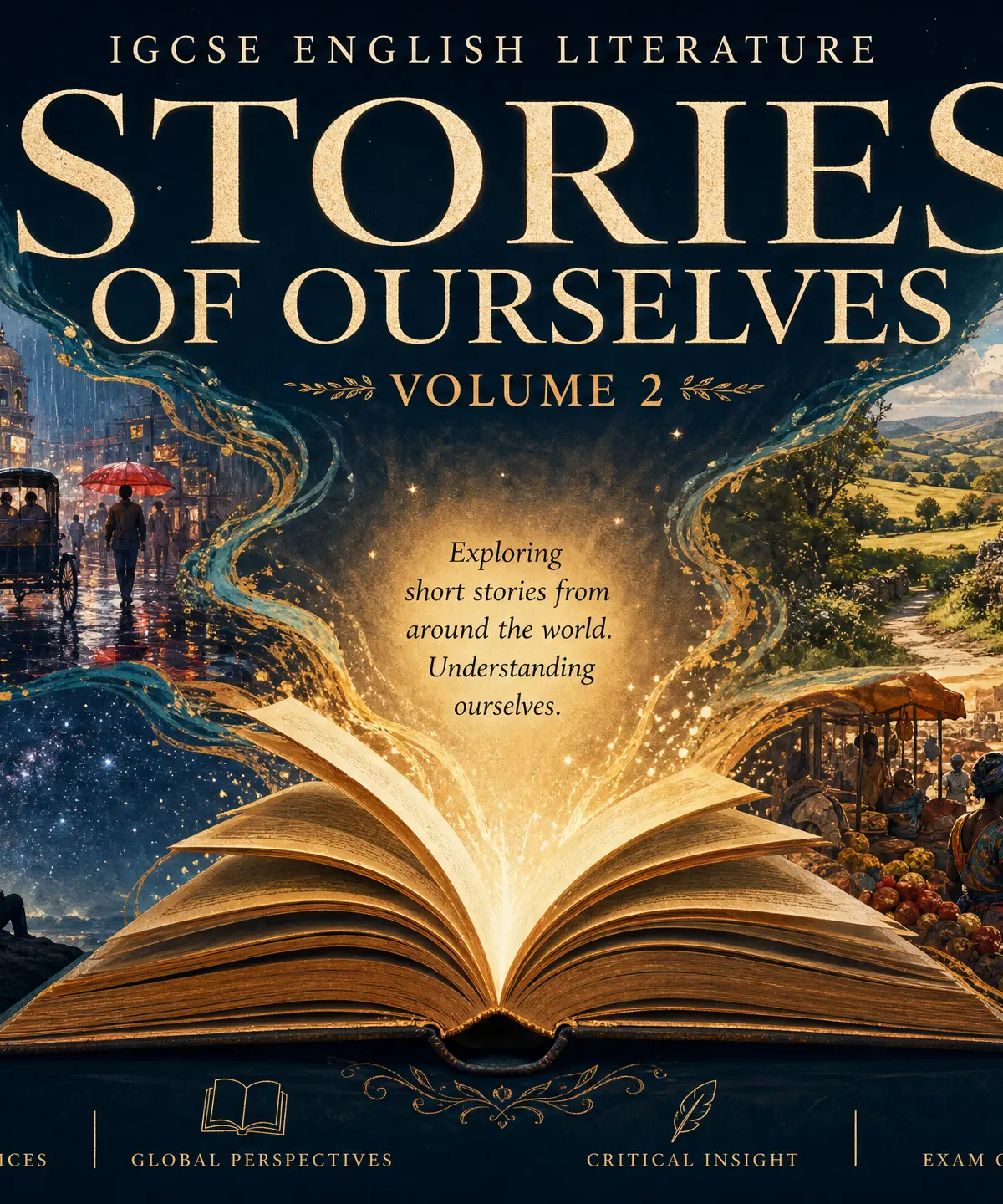
Stories of Ourselves Volume 2 is a carefully curated anthology of short fiction from around the world, selected for the Cambridge IGCSE English Literature syllabus. This collection is significant because it exposes candidates to a diverse range of narrative voices, cultural contexts, and literary forms. Examiners are not looking for simple plot summaries; they reward candidates who can perceptively analyse how these writers construct meaning. The highest marks are awarded to those who can dissect authorial choices—such as shifting perspectives, structural framing, and symbolic imagery—and evaluate their impact on the reader's understanding of complex themes like identity, isolation, and power.
Podcast Episode
Listen to our comprehensive 10-minute audio guide covering narrative voice, structure, themes, and crucial exam technique:

Core Analytical Focus
1. Narrative Voice and Perspective
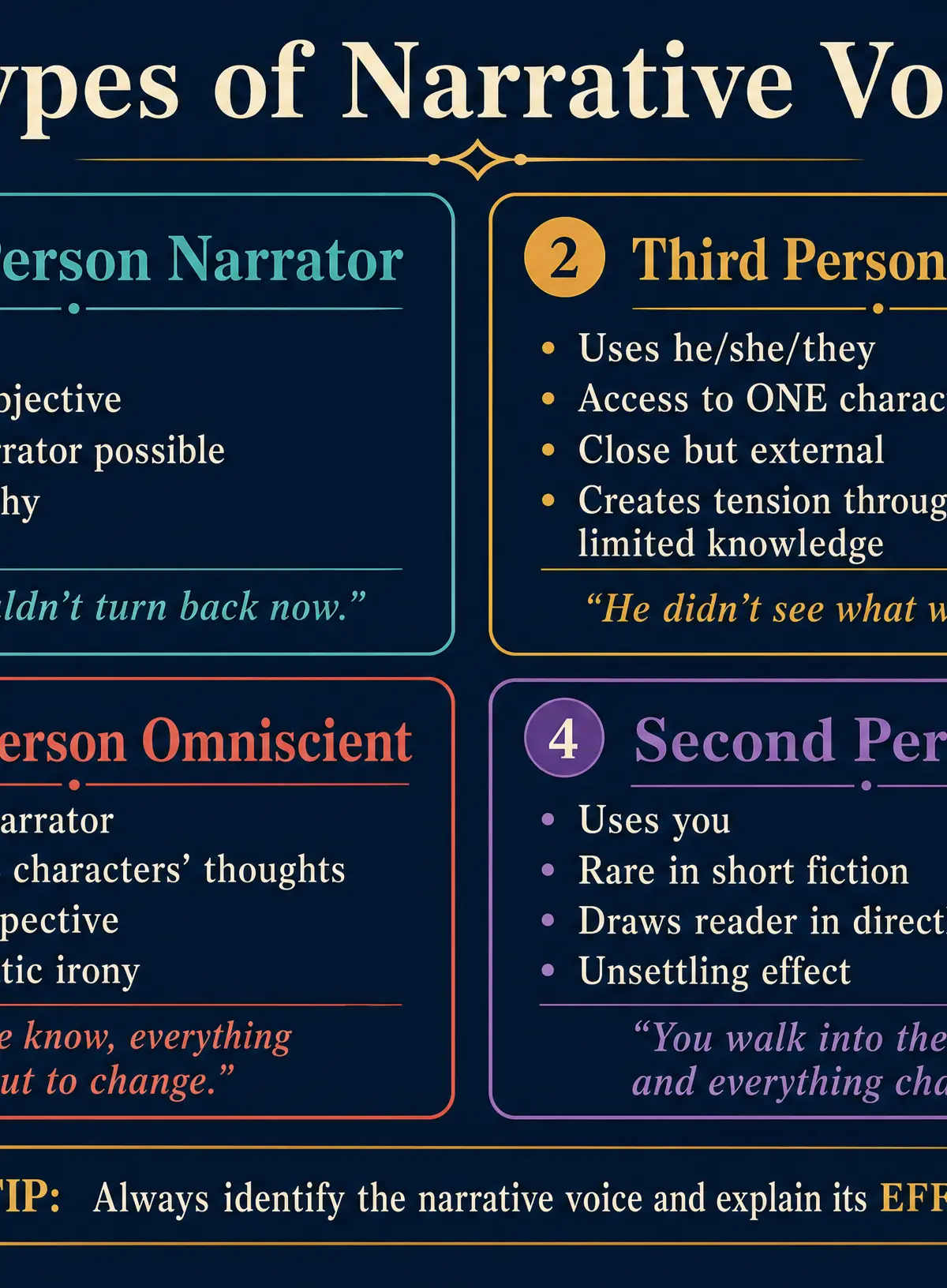
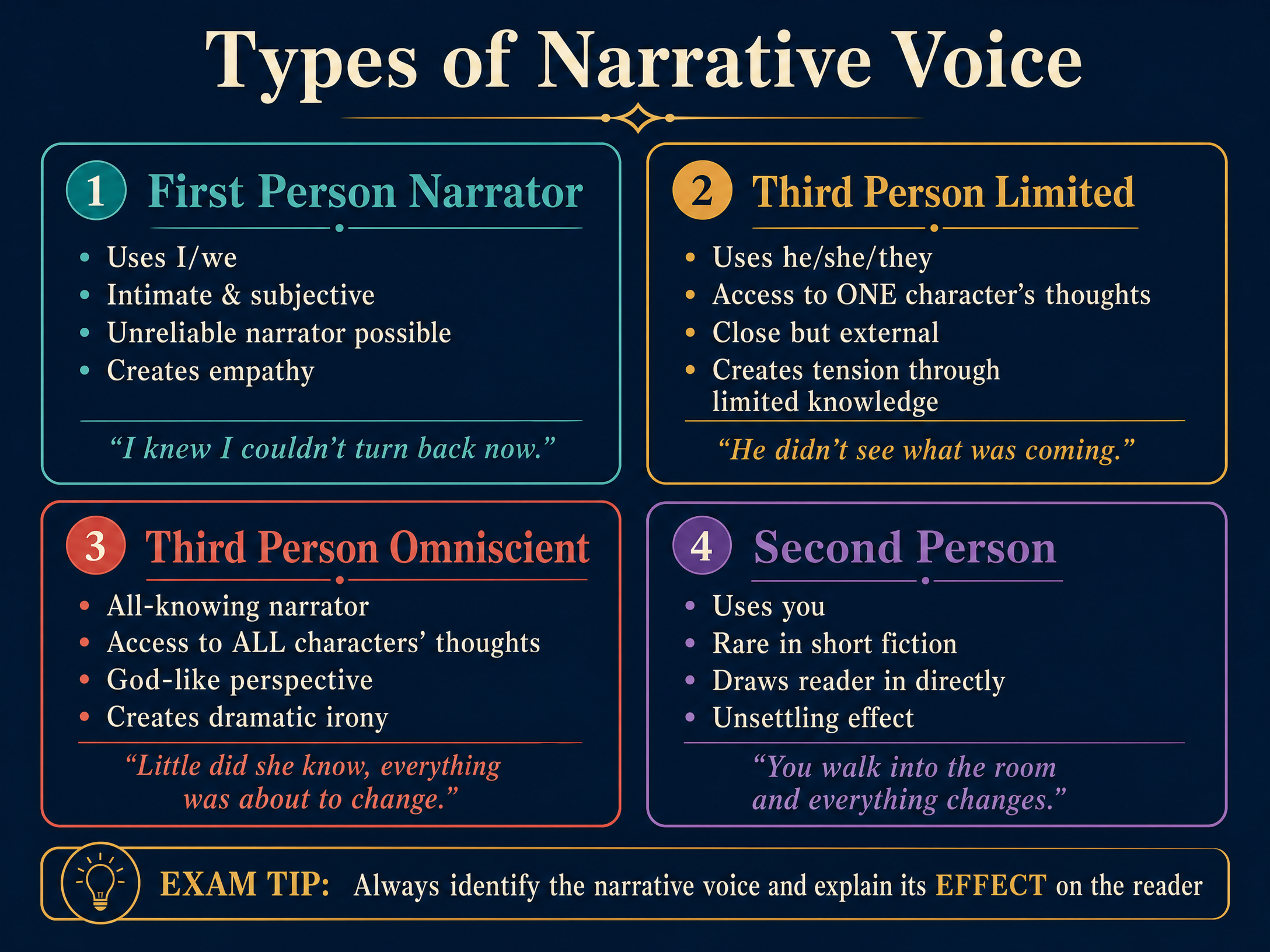
The choice of narrator is the single most important decision a short story writer makes. In this anthology, you must always ask: Who is telling this story, and what are their limitations?
- First-Person Subjectivity: When a story is told from the "I" perspective, the writer creates immediate intimacy. However, this perspective is inherently limited and often unreliable. The narrator can only report what they see, feel, and understand. Examiners reward candidates who explore the gap between what the narrator understands and what the reader infers.
- Third-Person Omniscience vs. Limited: A third-person limited narrator aligns closely with one character, creating tension by restricting our knowledge. An omniscient narrator, conversely, moves freely between minds, often creating dramatic irony where the reader knows more than the characters.
2. Structural Craft in Short Fiction
Unlike novels, short stories must achieve their effects rapidly. Writers use specific structural techniques to manipulate pace and tension:
- In Medias Res: Beginning "in the middle of things" drops the reader directly into the conflict, bypassing exposition to hook the reader immediately.
- Cyclical Structures: Stories that end where they began often emphasize a character's inability to escape their circumstances or the inevitability of fate.
- Epiphanies and Ambiguous Endings: Many stories in this collection avoid neat resolutions. Instead, they end with a moment of sudden realization (an epiphany) or deliberate ambiguity, forcing the reader to continue engaging with the text's themes after the final sentence.
Key Themes
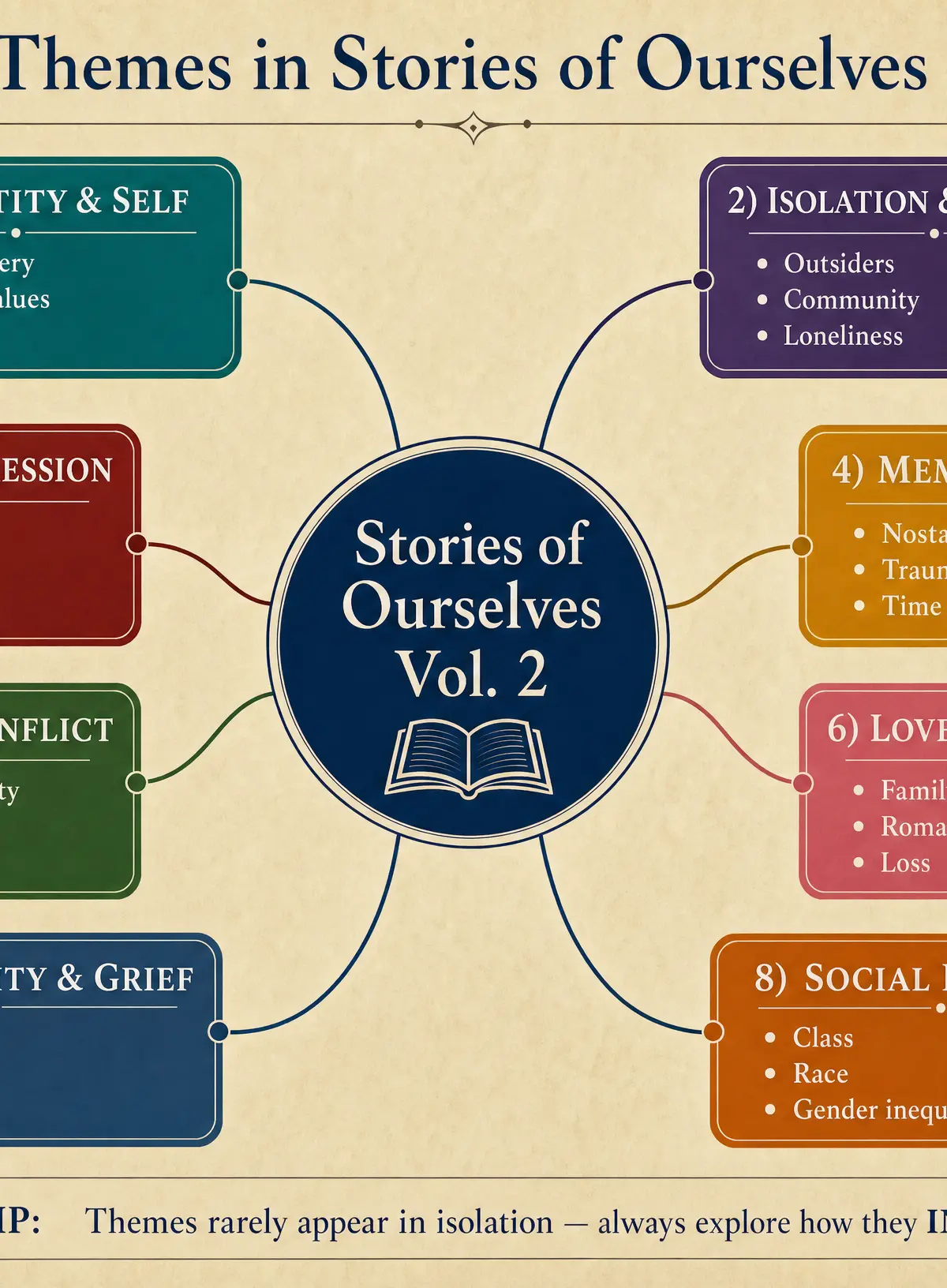
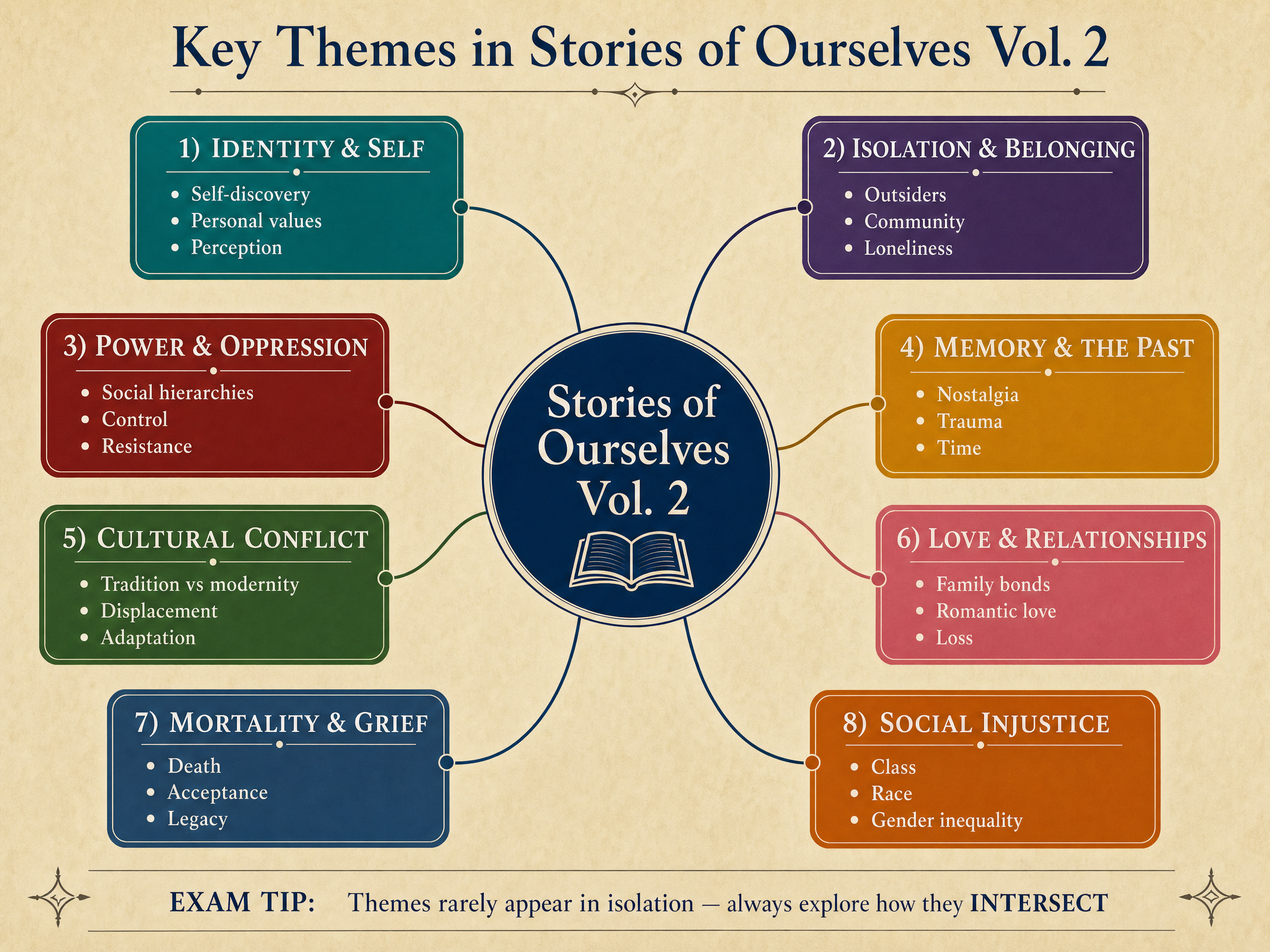
Theme 1: Identity and Self-Discovery
Many stories in the anthology explore the fragile nature of identity. Characters frequently grapple with how they define themselves versus how society defines them. This theme is often developed through internal monologue and symbolic settings that mirror the protagonist's psychological state.
Key Quotes for Analysis:
- "I was no longer sure who was looking back at me from the glass." - This use of the mirror motif visually represents the fragmentation of the self. The narrator's alienation from their own reflection highlights a profound crisis of identity.
- "They called me by a name that wasn't mine, and eventually, I answered to it." - The passive voice here ("They called me") underscores the loss of agency, demonstrating how external societal pressures can erode personal identity.
Theme 2: Isolation and Belonging
The figure of the outsider is central to Volume 2. Writers explore both physical isolation (being geographically separated) and psychological isolation (feeling alone within a community or family).
Key Quotes for Analysis:
- "The silence in the house was heavy, pressing down on him like a physical weight." - The writer's use of a simile comparing silence to a "physical weight" transforms an abstract feeling of loneliness into a tangible, oppressive force.
- "She stood on the edge of the crowd, watching the laughter but never quite hearing the joke." - The spatial positioning ("edge of the crowd") acts as a metaphor for her social exclusion, highlighting the painful dichotomy between proximity and connection.
Essay Technique
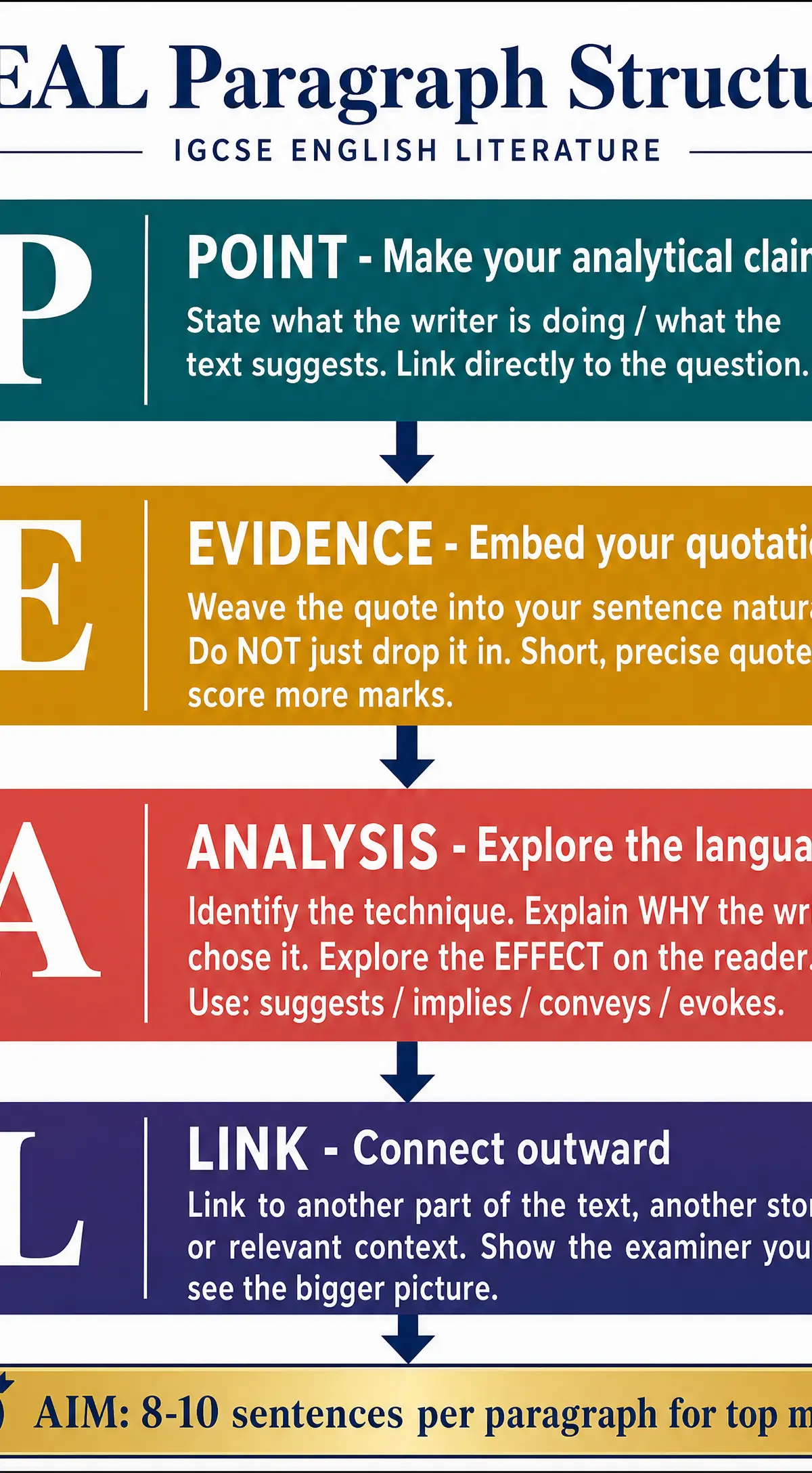
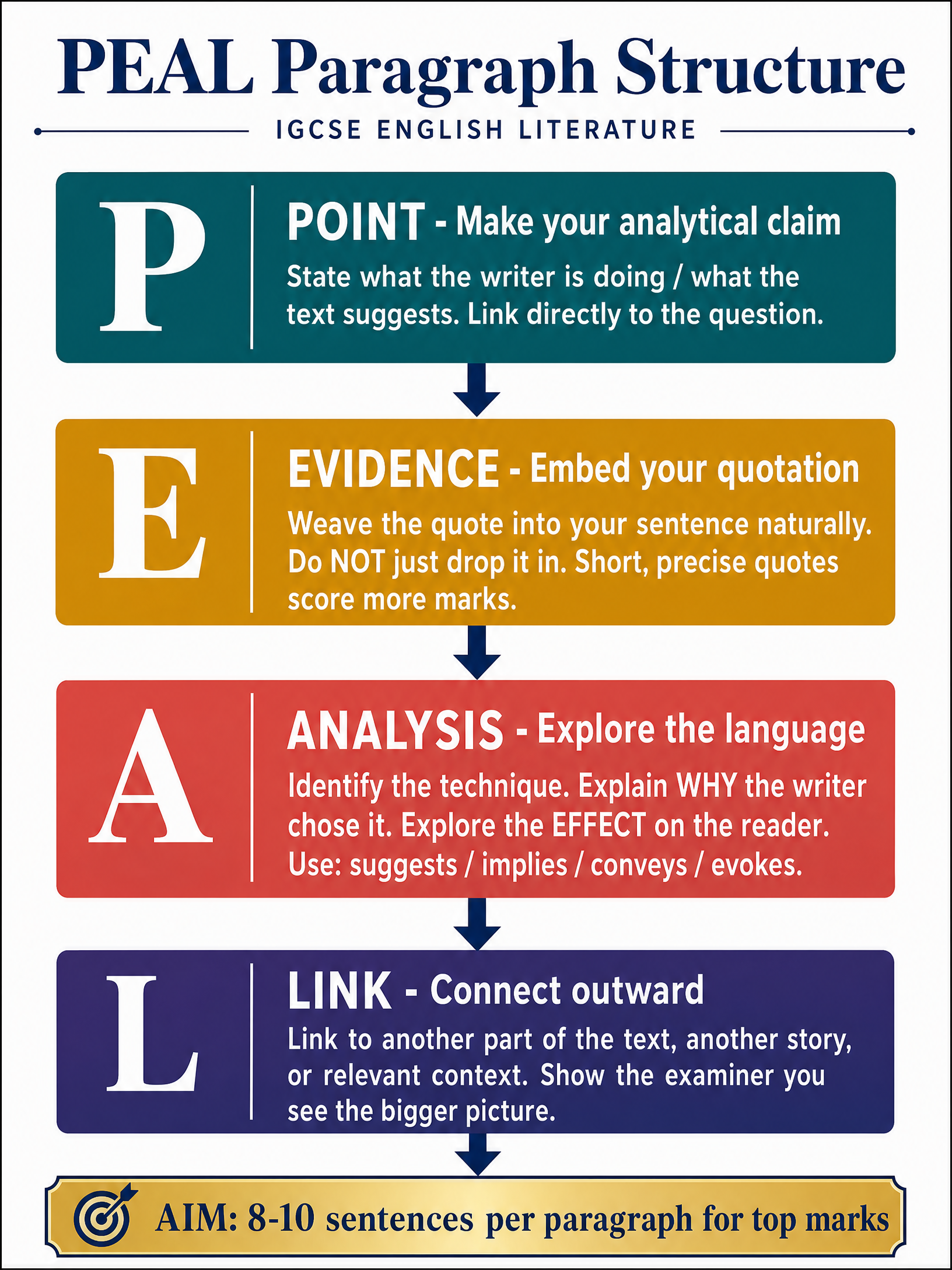
To achieve top marks (Level 5/6), candidates must move beyond feature-spotting. Use the PEAL structure (Point, Evidence, Analysis, Link) but ensure the 'Analysis' section focuses on the effect of the writer's methods.
Always integrate context (AO3) naturally. Do not write a separate paragraph about the author's life; instead, explain how the social or historical context illuminates the specific quotation you are analysing.
Visual Resources
3 diagrams and illustrations
Interactive Diagrams
1 interactive diagram to visualise key concepts
Conceptual Flow Outline
How Assessment Objectives combine to create a Level 6 response
Worked Examples
2 worked examples — open one to explore the question and available guidance.
Practice Questions
Test your understanding — click to reveal model answers
Explore how the writer creates a sense of tension in the opening of one story from the anthology. (30 marks)
Hint: Consider structural choices like 'in medias res', sentence length, and the withholding of information from the reader.
How does the writer present the conflict between tradition and modernity in one story from the anthology? (30 marks)
Hint: Look for symbolic representations of tradition (e.g., older characters, rural settings, heirlooms) clashing with modernity (youth, urban spaces, technology).
Starting with this extract, explore how the writer presents a character experiencing a moment of realization (epiphany). (30 marks)
Hint: Focus on the shift in language before and after the realization. How does the imagery change?
Explore how writers use setting to reflect characters' emotions in two stories from the anthology. (30 marks)
Hint: This requires comparative skills. Look for pathetic fallacy and symbolic landscapes.